- Home Page /
- Books /
- Science & Math /
- Biological Sciences /
- Biology /
- Biogenic Trace Gases: Measuring Emissions fro...
0 ratings


Item #:
59001934
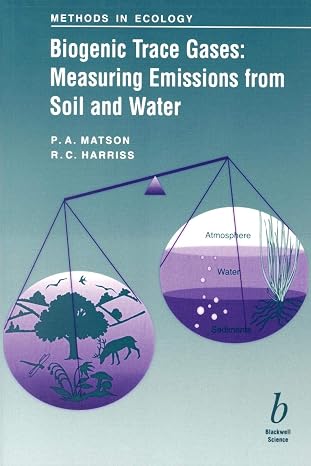
Biogenic Trace Gases: Measuring Emissions from Soil and Water (Ecological Methods and Concepts)
93% of respondents would recommend this to a friend
Item #:
59001934
SCR 1661
Price Details
Excluding Shipping & Custom charges ( Shipping and custom charges will be calculated on checkout )
*All items will import from US
0 ratings
Write a review
In stock
 Imported from USA store
QTY:
Order now and get it around Sunday, September 27
Secured transaction
Ubuy works hard to protect your security and privacy. Our advanced payment security system ensures confidentiality by encrypting your information during transmission using AES (Advanced Encryption Standards) and SSL (Secure Socket Layer) protocols. Your payment details are 100% secure as we do not share your payment details with third party sellers.
Our Top Logistics Partners


A how-to guide for measuring atmospheric trace gases, essential for understanding global climate change.

Fast
Shipping

Free
Return*

Secure Packaging

100% Original Products

PCI DSS Compliance

ISO 27001 Certified



Note: Step Down Voltage Transformer required for using electronics products of US store (110-120). Recommended power converters Buy Now.


What Stands Out
Comprehensive Analysis
Provides in-depth methodologies for measuring biogenic trace gas emissions, facilitating accurate research in soil and water impact on climate change.
Interdisciplinary Approach
Integrates insights from ecology, environmental science, and atmospheric science, making it essential for researchers across related fields.
User-Friendly Protocols
Offers clear, step-by-step protocols for measuring emissions, enabling both novice and experienced researchers to conduct studies effectively.
Product Details
| Publisher | Wiley-Blackwell |
| Publication date | May 1, 1995 |
| Edition | 1st |
| Language | English |
| Print length | 408 pages |
| ISBN-10 | 0632036419 |
| ISBN-13 | 978-0632036417 |
| Item Weight | 1.33 pounds (600 grams) |
| Dimensions | 6.14 x 0.92 x 9.21 inches (15.6 x 2.3 x 23.4 cm) |
Who Should Buy?

-
Environmental Researchers
Ideal for those studying greenhouse gas emissions and their impact on climate change from soil and water sources.
-
Agricultural Scientists
Useful for agronomists assessing soil health and optimizing crop management by measuring nutrient-related gas emissions.
-
Ecological Professionals
Beneficial for ecologists examining ecosystem dynamics and biogeochemical cycles through trace gas emission measurements.

-
General Audience
Not suitable for laypersons without a scientific background, as the content is technical and specialized.
Product Description
Biogenic Trace Gases: Measuring Emissions from Soil and Water (Ecological Methods and Concepts)
Have any Query? Chat with us
Customer Questions & Answers
-
Question:
What are biogenic trace gases and why are they important?
Answer: Biogenic trace gases, such as methane and nitrous oxide, are produced by biological processes in soil and water environments. They are important because they have significant impacts on climate change and the greenhouse effect. Understanding their emissions helps in assessing ecosystem health and developing strategies to mitigate environmental impacts. For instance, farmers can adjust practices to reduce emissions, contributing positively to climate action. -
Question:
How does the measurement of biogenic trace gases work?
Answer: Measurement involves capturing gas emissions using specialized equipment like gas chromatography or portable analyzers. These tools detect concentration levels of various gases in the soil and water. Understanding these levels is crucial for evaluating ecological processes and improving land management practices. This can guide decisions in agriculture, wetland restoration, and urban development, ultimately leading to more sustainable practices. -
Question:
What role do biogenic trace gases play in climate change?
Answer: Biogenic trace gases contribute significantly to the greenhouse effect, with methane being over 25 times more potent than carbon dioxide over a 100-year period. Their effective management can help mitigate climate change impacts. By measuring these emissions, scientists can better understand their sources and develop targeted approaches to reduce atmospheric concentrations, benefiting Seychelles climate initiatives. -
Question:
Who can benefit from studying biogenic trace gases?
Answer: Researchers, environmentalists, agricultural professionals, and policymakers can all benefit from studying biogenic trace gases. Understanding emissions from soil and water helps inform conservation strategies, agricultural practices, and environmental regulations. For instance, farmers can utilize this information to optimize fertilizer use and improve soil health while contributing to climate sustainability. -
Question:
Are there specific tools recommended for measuring biogenic trace gases?
Answer: Yes, tools like gas chromatography, infrared sensors, and laser spectroscopy are commonly used to measure biogenic trace gases. These devices are capable of providing precise, real-time data on gas concentrations. Utilizing the correct tools allows researchers and practitioners to accurately monitor emissions, aiding in research, agriculture, and environmental conservation initiatives. -
Question:
What are the environmental implications of high biogenic trace gas emissions?
Answer: High emissions of biogenic trace gases can lead to climate destabilization, contributing to adverse weather patterns and ecological impacts. They may also affect air quality and human health. By recognizing and addressing these emissions, stakeholders can implement practices that protect the environment and promote healthier ecosystems, such as enhancing soil management and reducing fertilizer runoff. -
Question:
How can farmers use biogenic trace gas measurements to improve crop yield?
Answer: Farmers can use measurements of biogenic trace gases to fine-tune their agricultural practices. By understanding emissions linked to soil health and fertilizer application, they can optimize their techniques to improve crop yields and reduce environmental impact. For example, adjusting nitrogen fertilizer based on trace gas emissions can enhance nutrient use efficiency, leading to better harvests. -
Question:
Can urban planners utilize biogenic trace gas data?
Answer: Absolutely. Urban planners can use biogenic trace gas data to assess the environmental impact of land use projects. By understanding emissions from green spaces or wetlands, they can design urban areas that minimize greenhouse gas emissions while maximizing ecosystem functions. This can lead to sustainable urban development that enhances quality of life for city residents. -
Question:
What factors can influence biogenic trace gas emissions?
Answer: Several factors influence biogenic trace gas emissions, including soil type, moisture levels, temperature, and land use practices. For example, anaerobic conditions in waterlogged soils can lead to higher methane emissions. By understanding these variables, scientists and land managers can predict emissions and develop strategies to manage them, contributing to enhanced environmental quality. -
Question:
Where can I buy Biogenic Trace Gases: Measuring Emissions from Soil and Water in Seychelles?
Answer: You can purchase 'Biogenic Trace Gases: Measuring Emissions from Soil and Water' from Ubuy. They offer a wide selection of books and products related to environmental science, including this title. Ubuy provides a convenient platform to find the materials you need for your research or studies.
P. A. Matson (Editor) Biology Editorial Review
No editorial reviews found
Customer Reviews & Ratings
1 customers ratings
-
5 Star
0%
-
4 Star
100%
-
3 Star
0%
-
2 Star
0%
-
1 Star
0%
Review this product
Share your thoughts with other customers
Platform Trust & Buyer Confidence

JK
Jasmin
Verified buyer
“Great products and very good service: very easy and very fast international delivery.”
9 September 2026 · via Trustpilot
AG
Anke
Verified buyer
“Wonderful online shopping experience, smooth transaction from the start. Payment method works conveniently and delivery is unexpectedly fast and reliable. You go the extra mile for service. What makes this even more amazing, you deliver to Namibia. I will remain a happy Ubuy customer and will increase my purchases for sure! Thank you!”
10 September 2026 · via Trustpilot
H
Hazel
Verified buyer
“Very easy to find the products what you need, and so fast delivery, that’s why I highly recommended to others costumers to used ubuy.”
10 September 2026 · via Trustpilot
O
Opaleye
Verified buyer
“I received exactly what I ordered I was skeptical about your site because that was my first time to order. But the order came timely and neatly packaged. I was not disappointed. Thank you.”
11 September 2026 · via Trustpilot
AC
Adele
Verified buyer
“Easy to find and order what you want on the website. Delivery is quick to the UK”
8 September 2026 · via Trustpilot
Secure Checkout
Global Delivery
Easy Returns
Genuine Products
Product Price History
Important information
- Limitations : For products shipped internationally, please note that any manufacturer warranty may not be valid; manufacturer service options may not be available; product manuals, instructions, and safety warnings may not be in destination country languages; the products (and accompanying materials) may not be designed in accordance with destination country standards, specifications, and labeling requirements; and the products may not conform to destination country voltage and other electrical standards (requiring use of an adapter or converter if appropriate). The recipient is responsible for assuring that the product can be lawfully imported to the destination country. When ordering from Ubuy or its affiliates, the recipient is the importer of record and must comply with all laws and regulations of the destination country.
- Not all the products listed on Ubuy are for sale, as Ubuy is a global search engine. Products are subject to export/trade regulations.
SCR 1661
Order now and get it around Sunday, September 27
This item is not restrict in my country.(Please click on above link if this item is not restrict in your country, So our team will review and allow.)
QTY:
Secured transaction
PCI DSS compliant and ISO 27001:2022 certified, with encrypted payments and full buyer protection on every order.
Our Top Logistics Partners
Fastest cross-border delivery
Features & Benefits
- Detailed guide on detecting and measuring trace gases.
- Essential for understanding global biogeochemical cycles.
- Offers techniques applicable in various environments and scales.
- Introduces the role of trace gases in global cycles.
- Equips readers to address concerns regarding climate change.
- Supports ecological studies through effective trace gas measurement.
Ubuy Assurance
Experience worry-free shopping with 100% original products, PCI DSS-compliant payment security, ISO 27001-certified data protection, the fastest cross-border delivery, free returns *, and secure packaging on every order.